
 Dutch
 English
 Spanish
 Italian
 Portuguese
 German
 French
 Russian
 Arabic
Torsion zone bits are designed to absorb torque shocks, reduce breakage, and extend service life, particularly in impact driving applications. But do they really outperform regular screwdriver bits, or are these benefits exaggerated?
In this article, we’ll explore how torsion zone bits work and whether they live up to these claims.

What Are Torsion Zone Bits?
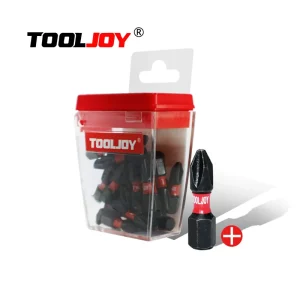
Torsion zone bits are screwdriver bits with a specially designed flexible section in the shaft, known as the torsion zone. This section allows the bit to twist slightly under load, helping reduce sudden torque peaks and the risk of breakage.
Unlike regular screwdriver bits, torsion bits are particularly suited for impact drivers, which generate repeated rotational impacts during fastening.
Torsion zone bits are available in common drive profiles, including Phillips (PH), Pozidriv (PZ), Torx (T), and Square (SQ), making them suitable for various fastening applications.
How Do Torsion Zone Bits Work?
Impact drivers deliver repeated bursts of rotational force to tighten screws. When a screw encounters high resistance, these sudden impacts can place significant stress on the screwdriver bit, increasing the risk of wear or breakage.
Torsion zone bits are designed to help manage these forces through a flexible section in the shaft.
How the Torsion Zone Absorbs Impact?
The torsion zone works much like a spring. When the bit experiences a sudden increase in torque, this section twists slightly instead of remaining completely rigid.
This controlled twisting helps cushion the impact and reduce sudden stress peaks on the bit. As the force decreases, the torsion zone returns to its original shape, ready for the next impact.
By repeatedly flexing under load, the torsion zone can help reduce fatigue-related damage and extend the bit’s service life, particularly in demanding impact-driving applications.
Torsion Zone Bits vs. Regular Bits
Both torsion zone bits and regular screwdriver bits perform the same basic fastening function. The main distinction is how their shaft designs respond to fluctuating torque.
| Feature | Torsion Zone Bits | Regular Screwdriver Bits |
| Shaft design | Dedicated flexible torsion section | Generally more uniform, relatively rigid shaft |
| Response to torque peaks | Designed to provide greater elastic twisting | Usually provides less intentional torsional compliance |
| Impact resistance | Can help manage repeated impact loads | Depends on construction and impact rating |
| Typical applications | Impact driving and demanding fastening | Manual screwdriving and conventional powered fastening |
| Service life | May last longer under suitable impact conditions | Can perform equally well in lower-impact applications |
| Cost | Often more expensive | Generally less expensive |
An important distinction is that torsion zone and impact-rated are not interchangeable terms. A bit can be designed for impact use through appropriate steel selection, heat treatment, and structural design without necessarily having an obvious narrowed torsion section. Similarly, the presence of a flexible section alone does not guarantee that a bit is suitable for impact drivers.
For a broader explanation of impact compatibility, see Do Impact Drivers Need Special Bits?.
Do Torsion Zone Bits Really Last Longer?
Torsion zone bits may last longer under repeated impact loads, but their durability depends on more than the torsion zone itself. Several factors influence actual service life:
1. Steel Composition and Heat Treatment
High-quality tool steels, such as S2, provide the strength and toughness needed for demanding fastening applications. Proper heat treatment balances hardness, wear resistance, and toughness, helping prevent premature deformation or fracture.
2. Bit Tip Geometry and Fit
Precisely machined tips ensure proper engagement with screw heads, reducing cam-out, slipping, and premature wear. Even a well-designed torsion zone cannot compensate for poor tip geometry or incorrect sizing.

3. Torsion Zone Design
The length, diameter, and geometry of the torsion zone determine its ability to flex under load. A properly designed zone can help manage torque peaks, while excessive flexibility or poor structural transitions may increase failure risks.
4. Operating Conditions
Service life varies with fastening torque, impact frequency, screw type, and tool selection. Bits used with impact drivers face different stresses than those used in low-torque applications.
When Are Torsion Zone Bits Worth It?
Torsion zone bits are particularly useful in applications involving repeated torque shocks, but they are not necessary for every fastening task.
Applications Where They May Be Beneficial?
- Impact Driving: Help manage sudden torque peaks generated by impact drivers.
- Construction and Woodworking: Suitable for driving long screws and structural fasteners under high resistance.
- Repetitive Fastening: May reduce bit breakage and replacement frequency in demanding operations.
- High-Resistance Fastening: Provide controlled flexibility when screw resistance changes abruptly.
When Regular Bits May Be Sufficient?
Standard screwdriver bits are generally suitable for manual screwdriving, low-torque assembly, and controlled-torque applications with minimal impact loading.
Are Torsion Zone Bits Just Marketing Hype?
Torsion zone bits are not just a marketing gimmick. Their flexible shaft design helps reduce sudden torque peaks and stress concentrations during impact driving, which can reduce fatigue-related failures and extend bit service life.
However, some manufacturers may exaggerate these benefits, particularly when claiming that torsion bits last several times longer than regular bits without providing comparable test conditions.
While torsion zones can improve durability, the actual increase in service life depends on bit design, material quality, heat treatment, and operating conditions.
Conclusie
Choosing the right screwdriver bits requires balancing performance, durability, and application needs.
As a professional screwdriver bit manufacturer, GEREEDSCHAP offers a variety of standard and torsion zone bits, with OEM and ODM customization options to meet different fastening requirements.
Looking for reliable screwdriver bits for your business? Contacteer TOOLJOY to discuss your requirements and find the right solution for your applications.


